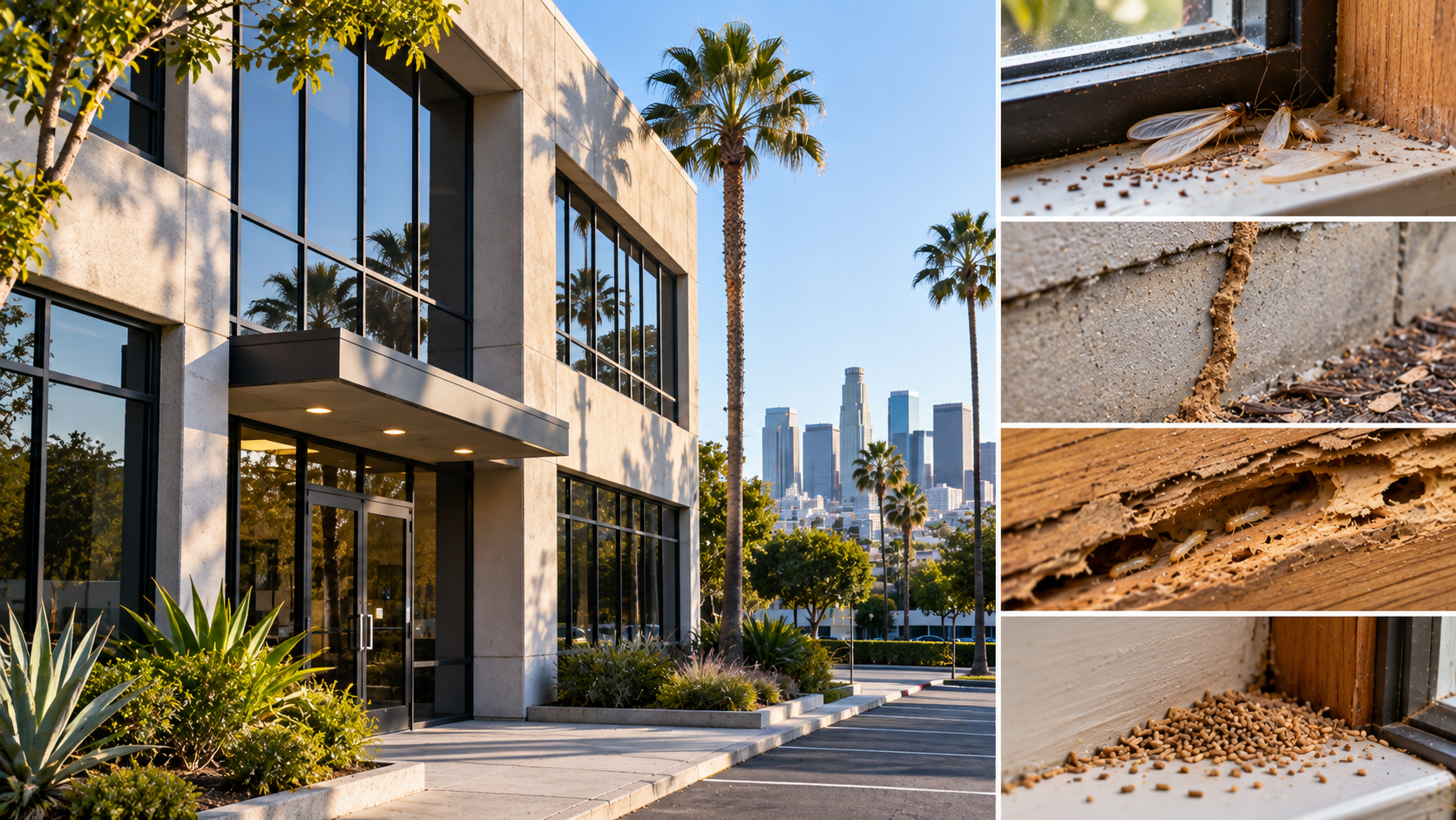
A tenant reports a dusting of pellets beneath a wooden window frame. Across the hall, a maintenance worker notices a narrow earthen tube along an exposed foundation wall. Neither discovery tells a property manager how much damage exists, yet both deserve attention. In Los Angeles, commercial buildings can contain wood components behind finishes that are difficult to inspect during everyday operations. We help owners and managers identify termite evidence, understand what remains inaccessible, and make informed decisions before a small concern turns into a complicated building project.
Hidden Activity Can Outlast a Quiet Workday
Termites do not need a vacant building to stay active. Drywood colonies can live inside framing or trim without connecting to the soil, while subterranean termites generally approach wood from colonies in the ground. That distinction matters in an office, retail property, or mixed-use building because the evidence and treatment approach can differ. A few discarded wings are not enough to establish which species is present or whether activity is ongoing.
During a professional inspection, we pay attention to signs that staff might otherwise overlook:
- Pellets: Small, hard droppings beneath wood can suggest drywood termites, but their presence alone does not date the infestation.
- Mud tubes: Earth-colored passages along foundations may indicate subterranean termites moving between soil and building materials.
- Wings: Discarded swarmer wings near windows warrant identification rather than an immediate assumption about their source.
- Wood changes: Blistering, unusual hollowness, or localized deterioration calls for closer evaluation, not a diagnosis by appearance.
- Moisture: Leaks and wood-to-soil contact can create conditions especially relevant to subterranean termite risk.
Our article on professional termite inspections explains how accessible structural areas are examined and why conclusions depend on evidence. An inspection can reveal conditions, but it cannot certify that concealed cavities contain no termites. Clear notes about access limitations are part of responsible decision-making.
Inspection Findings Help Managers Prioritize Work
Consider a Los Angeles storefront with decorative wooden trim and a rear storage area. The public-facing space may appear sound, while a utility room has signs that were missed during routine cleaning. Inspecting systematically helps connect those observations without treating every mark as evidence of a building-wide infestation. It also gives managers something more useful than an informal report that termites were seen somewhere.
We recommend preparing these areas for an accessible assessment:
- Perimeter walls: Clear access near exposed foundations and the transitions between paving, soil, and siding.
- Utility spaces: Identify leaks, concealed pipe routes, and wood near persistently damp surfaces.
- Storage rooms: Move stock away from suspect wood where practical without dismantling fixtures or disturbing evidence.
- Attics and crawlspaces: Arrange safe access to reachable framing; leave hazardous or restricted spaces to qualified personnel.
- Exterior features: Include eaves, trim, attached structures, and wooden elements near landscaping in the visual review.
The findings can help separate immediate pest-control questions from maintenance and repair decisions. A leak may need correction regardless of termite activity. Damaged wood may require further evaluation even if no live insects appear during the visit. Managers should also record which areas could not be inspected and coordinate additional access if warranted.
For leased spaces, documenting observations can help building owners, tenants, and maintenance teams discuss responsibilities without relying on assumptions. It is useful when planned renovations may expose framing that was previously concealed.
Choose Treatment Based on the Building, Not a Guess
A commercial property often has occupied suites, delivery schedules, shared entrances, and equipment that cannot be moved casually. These realities make inspection findings essential before selecting treatment. Drywood termites confined to reachable wood may call for a localized approach, while widespread concealed activity could warrant a different discussion. Subterranean termite access may require soil treatment around or beneath the structure. None of these methods should be chosen solely from a photograph of pellets.
A practical response begins with a few clear decisions:
- Confirm identification: Determine which termite evidence is present and whether signs indicate active or historical damage.
- Compare options: Ask how spot or foam treatment, borate applications, soil treatment, or tenting relates to the findings.
- Plan access: Coordinate inspection and treatment with tenants, property staff, and any site-specific safety requirements.
- Address conditions: Schedule relevant moisture repairs or wood replacement separately from termite treatment when needed.
- Keep records: Retain findings and treatment documentation to guide follow-up and property planning.
Our discussion of DIY versus professional inspections shows why visible clues cannot replace a trained assessment. We explain the evidence and the available options rather than assuming every building requires tenting. The objective is a proportionate plan that respects the property’s physical condition and operating needs.
Give Your Building a Clearer Starting Point
Waiting for obvious damage can leave a commercial property with fewer practical choices. If you manage an office, retail building, or another property in Los Angeles County, Elite1 Termite Control can inspect accessible areas, explain suspicious evidence, and discuss treatment options supported by the findings. Contact our team to arrange a professional termite inspection and plan your next steps with confidence.