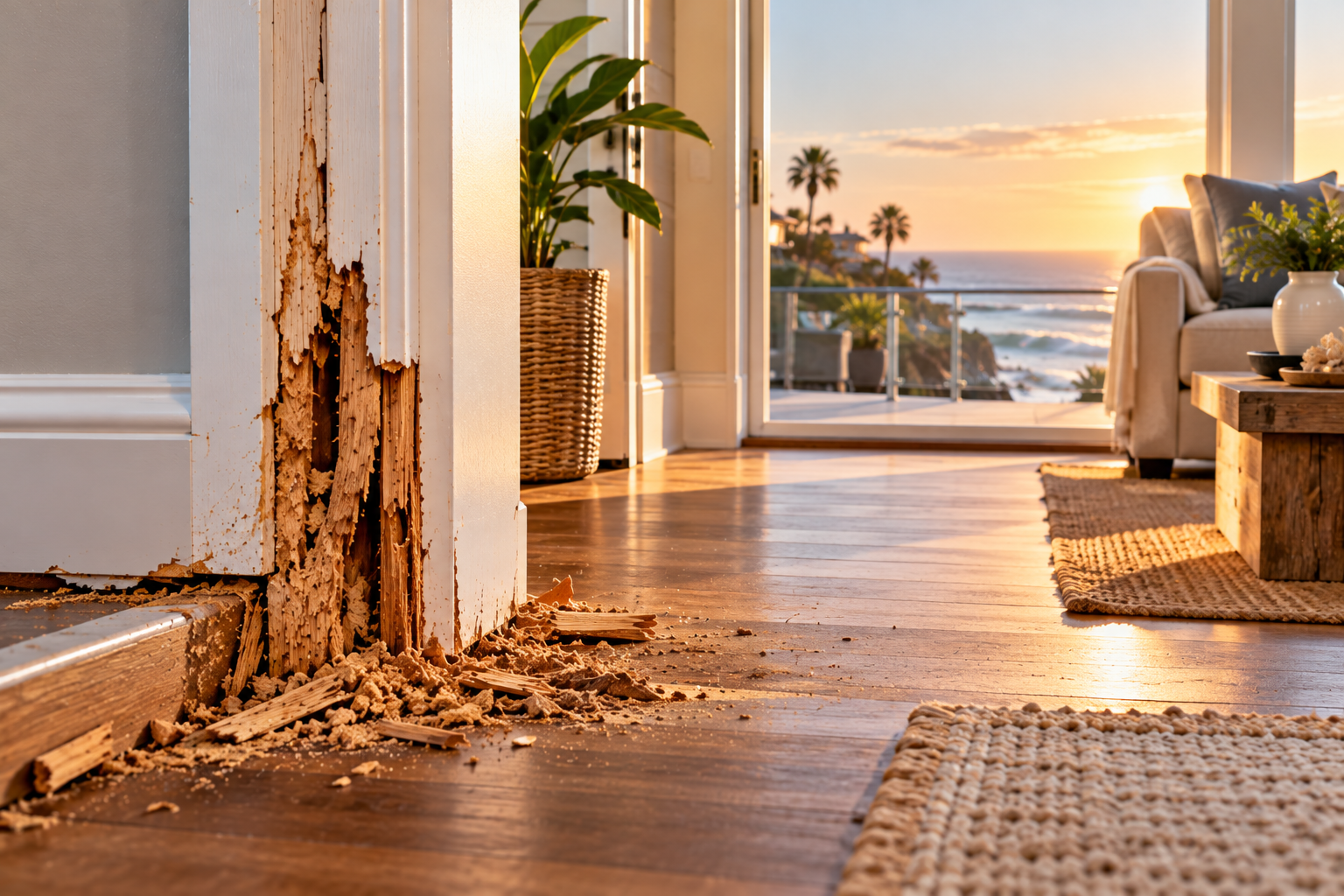
Coastal properties face a distinctive mix of termite risks because moisture, salt air, landscaping, exposed wood, and aging exterior materials can all influence structural conditions over time. Fall is a useful season to review those vulnerabilities before wetter weather arrives and before hidden activity becomes harder to trace. Both drywood and subterranean termites can affect Los Angeles County properties, but they use different pathways and require different treatment strategies.
Our team approaches termite control by looking at the entire property rather than focusing on one visible sign. Rooflines, attics, foundations, crawl spaces, exterior wood, irrigation zones, and moisture-prone areas all deserve attention. The goal is to reduce favorable conditions, keep vulnerable surfaces visible, and identify activity early enough for treatment to match the termite species and the extent of the problem.
Keep Attics, Eaves, and Roofline Wood Easy to Inspect
Drywood termites can establish colonies directly inside above-ground wood without soil contact, which makes attic framing, rafters, eaves, fascia, and other roofline components important inspection areas. Coastal exposure can also contribute to weathering or moisture intrusion that makes wood damage harder to interpret from the surface.
Our guide to attic termite risks explains why hidden feeding can continue even when only one small area appears affected. Professional inspection helps determine whether activity is localized or connected to nearby framing and wall transitions.
Fall attic checks should include:
- Looking for frass near rafters, beams, eaves, or window areas
- Checking for discarded wings around attic openings or light sources
- Reviewing roof leaks, staining, or damp wood that may hide other damage
- Inspecting exposed framing for galleries, surface changes, or weakened sections
- Keeping stored items from blocking access to attic edges and structural wood
- Noting repaired or replaced wood that may have a history of termite activity
A visible board with damage should not automatically be treated as the entire infestation. Drywood colonies can extend into connected structural wood, making species identification and full-area inspection important before treatment is selected.
Manage Moisture and Wood Contact Around the Exterior
Subterranean termites approach from soil and depend heavily on moisture, so foundations, landscaping, irrigation, and wood-to-soil contact deserve close attention. Coastal properties may also experience damp microclimates around shaded walls, planters, decks, and exterior plumbing, especially where drainage is poor.
Our technicians look for conditions that make termite access easier or hide warning signs. The recommendations in our guide to exterior termite defense emphasize keeping foundation edges visible, redirecting irrigation, repairing leaks, and removing wood debris.
Useful exterior priorities include:
- Keeping soil and mulch below exposed foundation edges
- Redirecting irrigation away from exterior walls and structural wood
- Repairing leaking hose bibs, pipes, and other outdoor plumbing
- Removing wood scraps, dead stumps, and stored lumber near the structure
- Separating deck posts, fencing, or siding from unnecessary soil contact
- Trimming vegetation that blocks foundation lines or keeps wood damp
These steps reduce favorable conditions, but they do not eliminate an established colony. If mud tubes, frass, discarded wings, or suspicious wood changes appear, professional termite control is needed to determine what type of termite is involved and which treatment method fits the findings.
Build Long-Term Protection Around Inspection and Species-Specific Treatment
Coastal termite prevention works best as an ongoing process because property conditions change. Landscaping matures, roof materials age, plumbing develops leaks, and repairs can create new structural transitions. A one-time check may miss risks that develop months later.
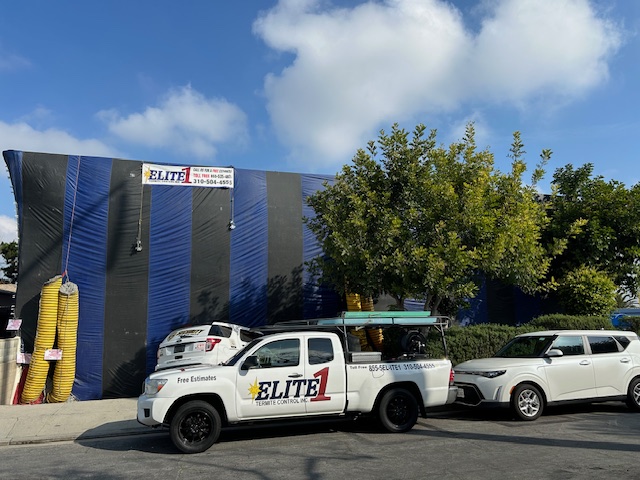
Our team uses inspection findings to decide whether monitoring, localized foam, borate treatment, soil treatment, or whole-structure tenting is appropriate. Drywood and subterranean termites behave differently, so the same treatment should not be applied automatically to every infestation.
A long-term prevention plan may include:
- Scheduling periodic professional termite inspections
- Rechecking areas with previous termite activity or repairs
- Monitoring foundations and moisture-prone exterior sections
- Reviewing attic and roofline wood after leaks or maintenance work
- Keeping crawl-space and exterior access areas visible for inspection
- Following up when new mud tubes, frass, wings, or wood changes appear
Borate treatment can be useful on certain exposed or accessible wood, particularly during construction or renovation when unfinished framing is open. Foam may suit some localized concealed activity, while soil treatment is more relevant when subterranean termites are using foundation-area pathways. Widespread drywood activity may require whole-structure tenting.
Professional evaluation is especially important on coastal properties because water damage, dry rot, aging materials, and termite damage can sometimes look similar. Correct identification prevents the wrong problem from receiving the wrong treatment.
Fall offers a practical opportunity to establish a baseline before wetter conditions arrive. Photos, inspection notes, and documented findings make future changes easier to compare. That record can help our technicians determine whether a new sign reflects renewed activity, an older condition, or a different moisture-related issue.
Strengthen Your Coastal Termite Defense Before Fall Progresses
If you notice frass, discarded wings, mud tubes, suspicious attic wood, or moisture-related structural changes, contact Elite1 Termite Control, Inc. for professional termite control, inspection, targeted treatment, and long-term monitoring.