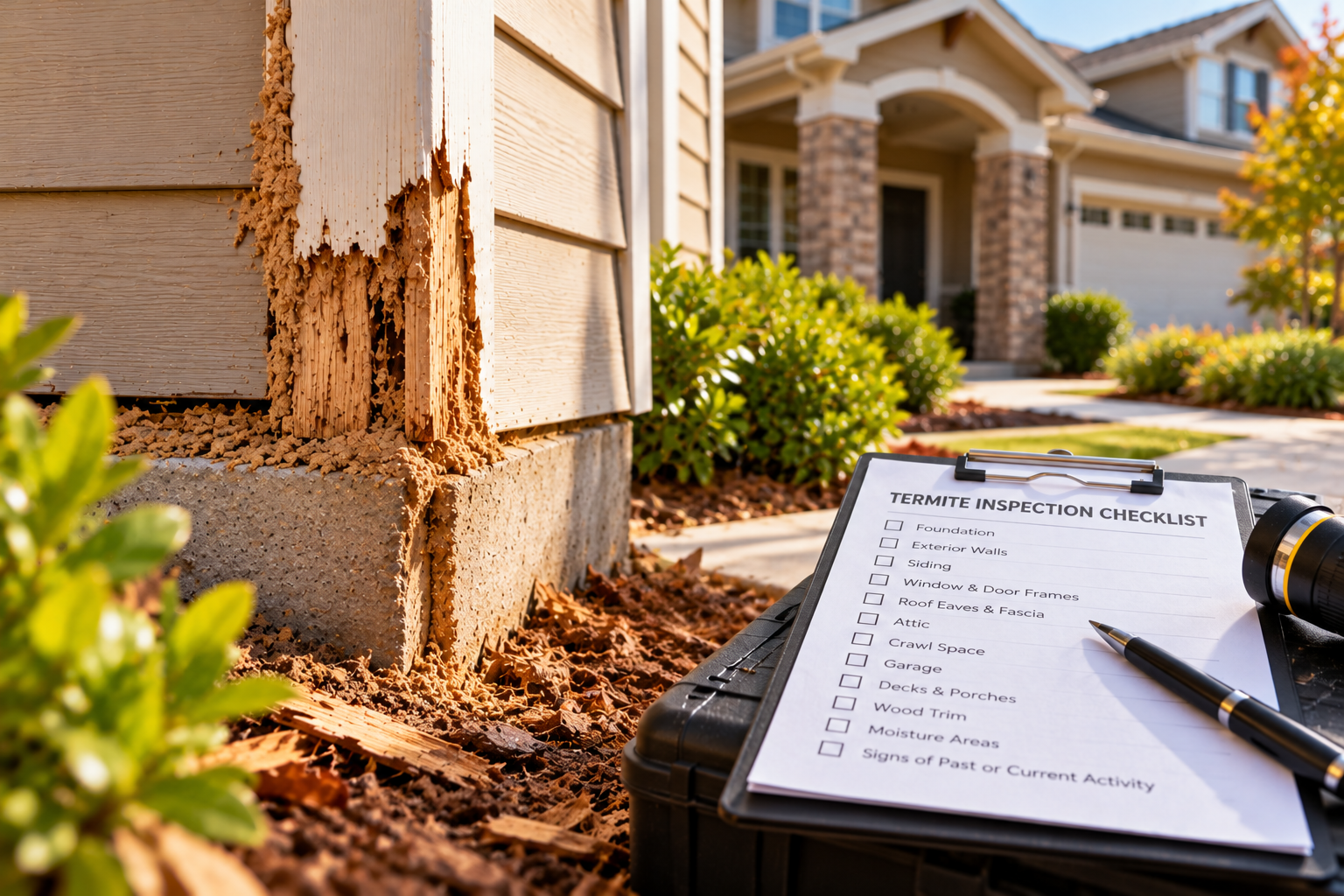
Buying a home is a major investment, and termite damage can complicate that decision if hidden activity is missed before closing. Drywood and subterranean termites can both affect Southern California properties, but they behave differently and may leave very different evidence. A careful inspection can help buyers understand whether a property shows signs of current activity, past damage, or conditions that could support future problems.
Our team approaches termite control by looking at the entire structure, not only the areas that are easy to see. Foundations, attics, crawl spaces, exposed wood, roof edges, wall transitions, and moisture-prone sections all deserve attention. A pre-purchase inspection provides a clearer baseline for the home and helps buyers make decisions with more complete information about treatment, repairs, and long-term monitoring.
Check for Visible Evidence and Hidden Structural Clues
A professional inspection starts with accessible interior and exterior areas where termite evidence is most likely to appear. Subterranean termites may leave mud tubes along foundations or walls, while drywood termites can produce small fecal pellets, discarded wings, or tiny openings in infested wood. Wood that sounds hollow, bubbling paint, sagging surfaces, or sticking doors can also justify closer evaluation.
Our guide to a professional termite inspection explains why surface checks alone are not enough. Inspectors compare visible signs with structural conditions and use the findings to determine whether further evaluation is needed.
A buyer’s checklist should include:
- Looking for mud tubes along foundations, walls, and crawl-space areas
- Checking window sills and floors for discarded wings or pellets
- Examining exposed wood for holes, blistering, or hollow-sounding sections
- Reviewing attics, eaves, rafters, and framing for drywood termite evidence
- Inspecting crawl spaces and foundation zones for subterranean activity
- Noting repaired or replaced wood that may hide earlier damage
These signs do not automatically confirm an active infestation, but they help identify areas that deserve professional attention before purchase.
Evaluate Moisture, Wood Contact, and Property History
Termite risk is influenced by more than visible insects. Moisture, drainage, wood-to-soil contact, landscaping, old repairs, and previous water damage can all affect how vulnerable a property may be. Older homes may have decades of repairs or hidden structural history, while newer homes can still face risks from fresh lumber, disturbed soil, construction joints, or landscaping changes.
This is why our team looks at the property as a system. A drywall surface does not rule out moisture behind it, and fresh paint does not prove that older damage was resolved correctly. Buyers should pay attention to both current evidence and conditions that could support future termite access.
Important risk factors include:
- Plumbing leaks near walls, kitchens, bathrooms, or crawl spaces
- Irrigation that repeatedly wets foundation edges or exterior wood
- Mulch, soil, or landscaping built up against wooden components
- Old stumps, stored lumber, or wood debris close to the structure
- Past repairs without clear documentation of termite treatment
- Additions or utility changes that created new structural gaps
A home’s age alone should never determine whether it is considered safe. Our discussion of termite risk factors shows why both older and newer properties benefit from species-specific inspection and monitoring.
Review Findings Before Making a Purchase Decision
The inspection report should help the buyer understand what was found, where it was found, and what the next steps may involve. Our technicians examine the property from foundation to roof, take photographs of findings, and provide straightforward recommendations based on the type and extent of activity.
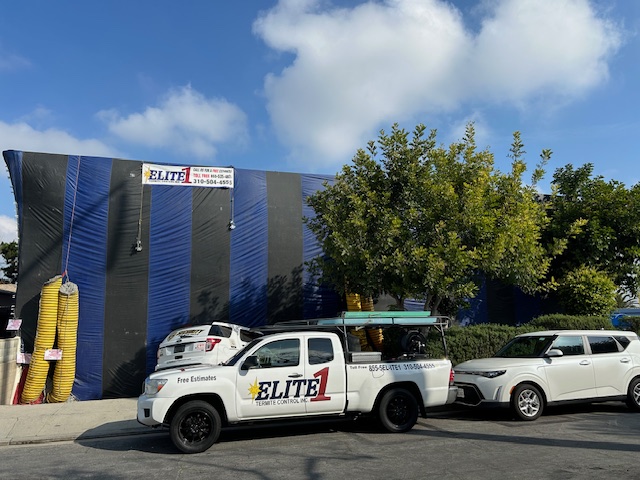
Treatment options can vary because drywood and subterranean termites require different approaches. Depending on the findings, professional termite control may involve foam treatment, soil treatment, borate applications, heat treatment, or whole-structure tenting. The appropriate method depends on termite species, infestation location, severity, and structural conditions.
Before moving forward with a purchase, buyers should review:
- Whether evidence suggests active termites or older, inactive damage
- Which termite species appears to be involved
- Whether damage is localized or extends into hidden structural areas
- What treatment method is recommended and why
- Whether damaged wood may require repair after treatment
- What follow-up inspections or monitoring should occur after closing
Treatment and structural repair are separate issues. Replacing damaged wood does not eliminate an active colony, and treating termites does not automatically restore weakened materials. Understanding that distinction can help buyers plan more accurately for both immediate work and long-term property care.
A thorough termite inspection also gives buyers a useful baseline for future monitoring. If the home is purchased, later inspections can be compared with the original findings to identify new mud tubes, pellets, discarded wings, or changes in wood condition. That makes the pre-purchase inspection valuable even when no active infestation is found. Buyers can also keep the report with maintenance records so future inspectors can compare changes, repairs, treatment history, and newly developing risk areas over time.
Know What You’re Buying Before You Close
Before finalizing a home purchase, contact Elite1 Termite Control, Inc. for a professional termite inspection, species identification, treatment recommendations, and long-term monitoring guidance based on the property’s actual conditions.