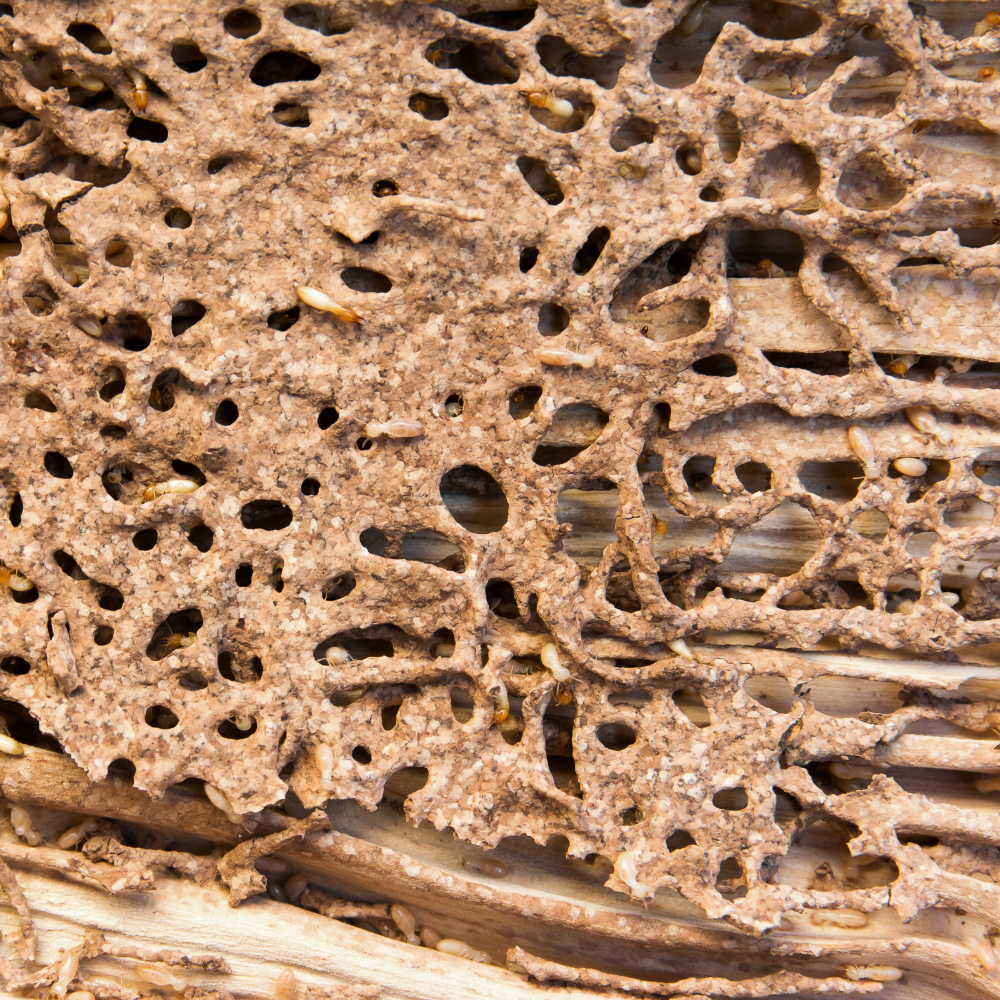
The word “tenting” can sound alarming when a homeowner has only noticed a handful of termite pellets near one window. Does one small patch of damage really mean the entire house needs treatment? Not necessarily. The right answer depends on the termite species, where the colony lives, and whether inspectors can confidently identify the full extent of activity.
Our team does not recommend whole-structure fumigation automatically. Localized drywood termite colonies in accessible wood may respond to carefully targeted treatment. But when evidence points to multiple or inaccessible colonies, treating only the visible spot could leave active termites elsewhere. Understanding that difference helps homeowners evaluate recommendations without relying on guesswork.
Spot Treatment Is Most Useful When Activity Is Localized
A focused treatment aims to reach termites within a specific piece or section of wood. For drywood infestations, technicians may drill small access holes and inject an appropriate foam into termite galleries, then seal the holes. Other methods, including borate applications on suitable exposed wood, may be recommended depending on the situation.
Before choosing a localized approach, we assess:
- Colony location: The affected wood must be reachable enough for the selected method to contact activity.
- Infestation boundaries: Evidence should support a limited problem rather than numerous disconnected colonies.
- Structural access: Finished walls, covered beams, or complicated framing may restrict direct applications.
- Species identification: Subterranean termites need soil-focused assessment rather than a drywood-only spot plan.
- Treatment history: Repeated findings after prior localized work may require a broader investigation.
The visible damage is not always the full problem. Drywood termites can remain concealed within timber for extended periods, while old pellets can persist after treatment. An inspection helps determine whether fresh evidence exists and whether the apparent location represents the entire infestation.
Our discussion of localized versus fumigation outlines the trade-offs between limited applications and whole-structure control. Saving disruption is valuable when the infestation is genuinely contained, but a convenient method is not sufficient if critical areas remain untreated.
Tenting Becomes Relevant When Colonies Cannot Be Isolated
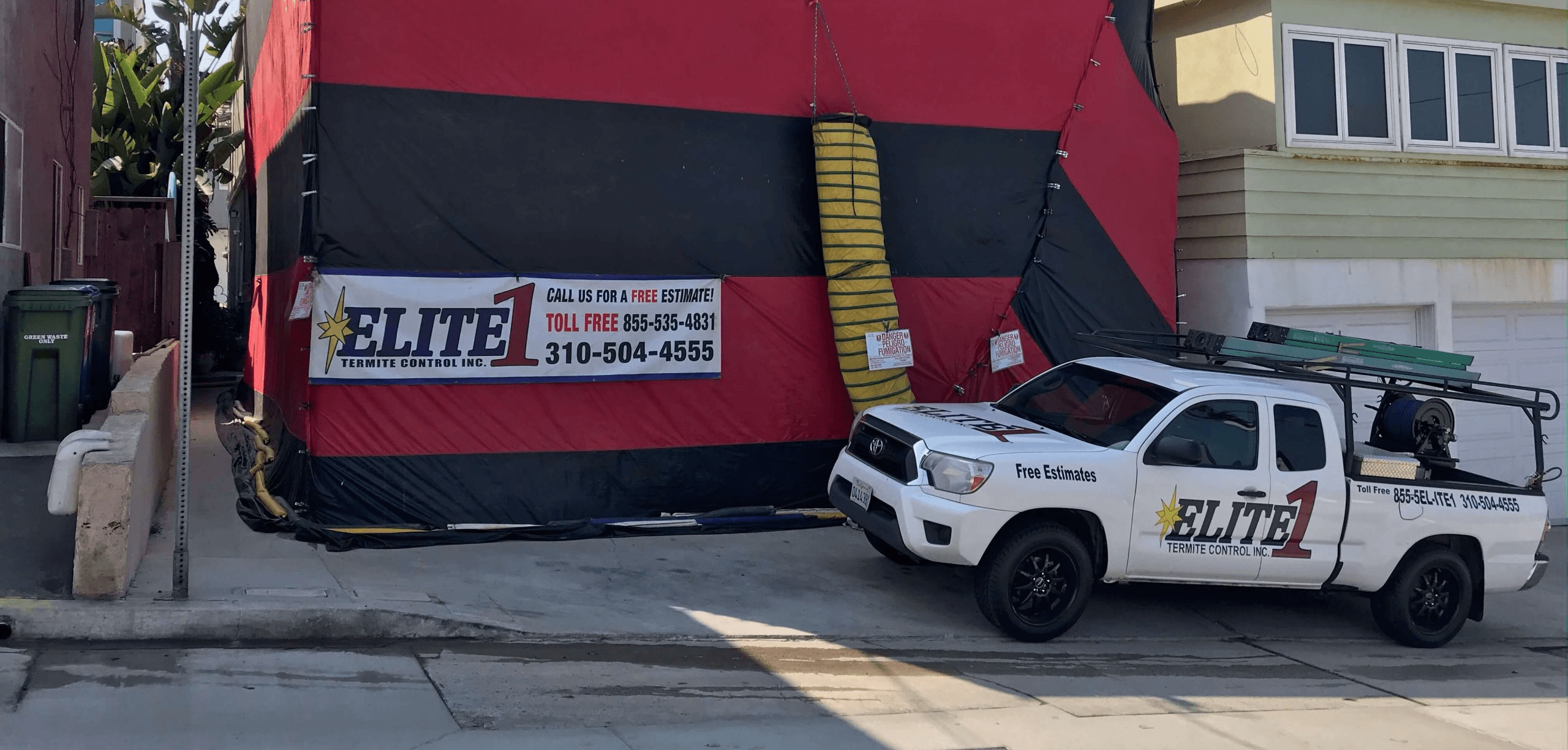
Whole-structure fumigation places the building under a sealed tent so a registered fumigant can penetrate inaccessible drywood termite galleries. It can reach places that direct injections cannot practically access. This makes it an option when activity is widespread or the inspector cannot reliably locate every infested section.
Signs that may influence the recommendation include:
- Multiple locations: Evidence appears across separate rooms, levels, or structural sections.
- Hidden framing: Suspected colonies occupy enclosed walls, roof connections, or wood that cannot be accessed directly.
- Recurring evidence: Activity continues after appropriate localized treatments or appears in previously unaffected areas.
- Building complexity: Construction features make complete gallery identification difficult without extensive opening of finishes.
- Confirmed drywood activity: The species and infestation pattern support whole-structure treatment rather than soil applications.
Tenting is not a standard solution for every termite species. Subterranean termites generally originate in soil and often call for foundation-area soil treatment. A building can also have both types, requiring a plan that addresses each source rather than assuming fumigation alone resolves everything.
Our article on when tenting is necessary explains why evidence across inaccessible areas can change the recommendation. What matters is not how dramatic the first visible sign looks, but whether targeted treatment can reasonably reach the affected colonies.
Preparation and Follow-Up Are Part of the Decision
Fumigation involves more planning than a localized application. Occupants and pets must leave during the treatment, and the building cannot be reentered until the licensed provider has completed the required clearance process. Preparation instructions will identify what needs to be handled before the fumigation begins.
Our team explains practical considerations, including:
- Occupant arrangements: Residents and pets need an alternative place to stay until authorized reentry.
- Food and medicines: Items must be handled according to the fumigator’s preparation instructions.
- Property access: Gates, attached features, and landscaping may affect how the tent is installed.
- Clearance procedures: Reentry must follow the required testing and safety authorization, not a guessed timetable.
- Future inspections: New termite activity remains possible because fumigation does not provide residual protection.
An effective decision also separates pest elimination from structural restoration. Fumigation can address active drywood termite infestations throughout the treated building, but it does not repair damaged framing or prevent new swarmers from establishing colonies later. Repairs, monitoring, or exposed-wood protection may be discussed separately.
Our guide to professional termite inspections explains how accessible evidence is documented before any service recommendation is made. Homeowners should understand which areas were examined, what species was identified, and why the chosen approach fits their building. That discussion makes a large treatment decision more manageable and helps avoid unnecessary work. It also gives homeowners a chance to review preparation requirements, expected disruption, safety procedures, and the inspection findings supporting the recommendation.
Get a Clear Answer Before You Tent
If you are unsure whether spot treatment can address your termite problem, contact Elite1 Termite Control for an inspection. Our team can review the evidence, explain the scope of activity, and recommend an appropriate approach.