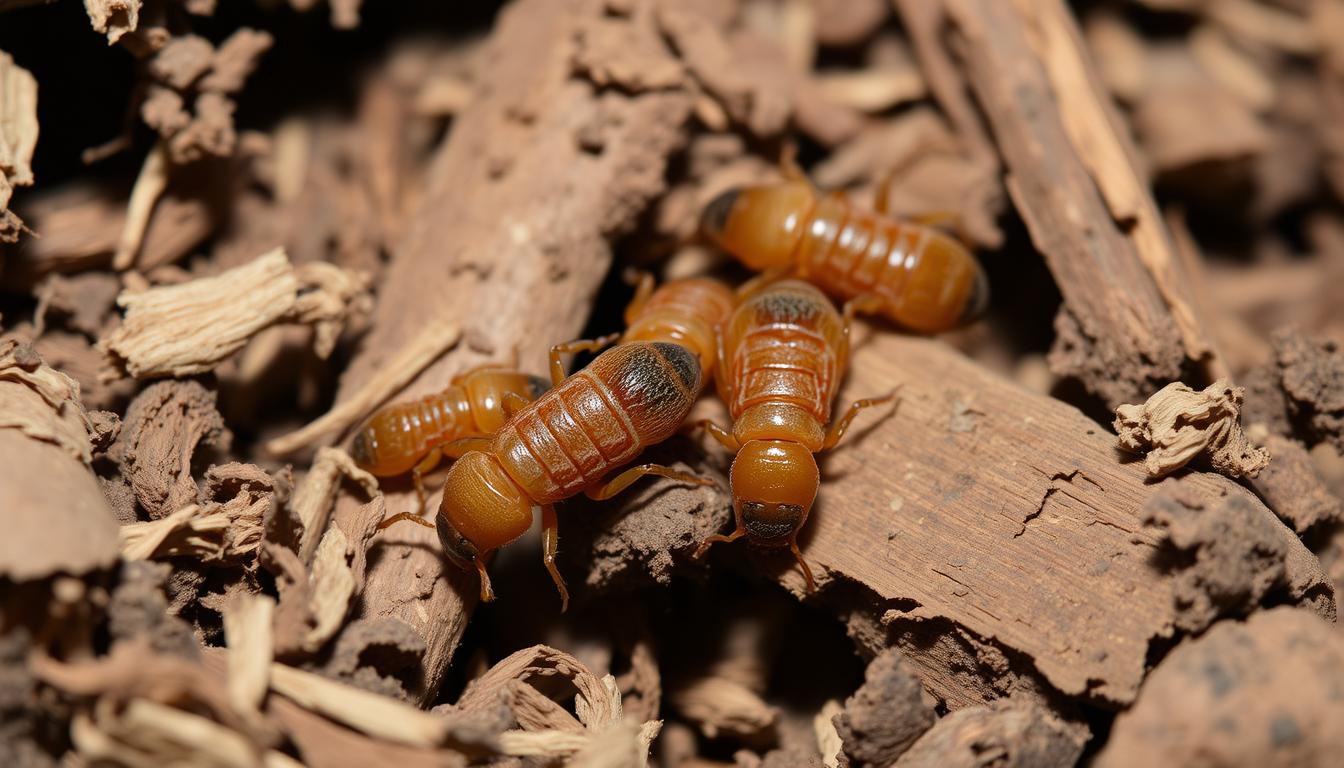
Two homes can show similar termite damage yet need entirely different treatment plans. A pile of hard pellets below a window frame can suggest drywood termites, while an earth-colored tube rising along a foundation may indicate subterranean activity. Both insects feed on wood, but where their colonies live determines which treatments can reach them.
Our inspections begin with identification and an assessment of the affected areas. We look for evidence that connects damaged wood to a particular termite species, then evaluate how far the infestation extends. Choosing termite treatment on appearance alone risks targeting the wrong location and leaving active colonies undisturbed.
Drywood Termites Require Treatment Inside Infested Wood
Drywood termite colonies establish themselves in wood without maintaining a connection to the soil. They can occupy attic rafters, fascia, trim, and other accessible or concealed wooden components. Because activity may remain confined within timber, treating the ground around a foundation will not necessarily reach the colony.
Our recommendations depend on the distribution of activity:
- Localized foam: For confirmed colonies in reachable wood, carefully placed injections can deliver treatment into galleries.
- Precision spot treatment: Focused applications may address a limited infestation without treating the entire building.
- Borate applications: Suitable exposed, unfinished wood can receive a protective treatment where direct access permits.
- Whole-structure fumigation: Extensive drywood activity in inaccessible or multiple structural areas may require tenting.
- Follow-up inspection: Rechecking relevant locations helps distinguish old pellets or damage from renewed activity.
Small piles of frass, or termite pellets, may remain after an earlier infestation. They do not automatically prove current activity or reveal the full extent of the galleries. We inspect surrounding wood and building connections before deciding whether the problem is truly isolated.
Our article on drywood termite options explains why access and infestation size influence the choice between focused treatment and full-structure methods. The least disruptive option is not necessarily the most effective when additional colonies cannot be located reliably.
Subterranean Termites Demand a Soil-Focused Strategy
Subterranean termite colonies typically live in soil and travel toward structural wood through protected pathways. Their mud tubes help maintain the conditions needed for movement. A foam injection into one damaged board may address insects there while failing to interrupt a larger colony’s access from below.
An inspection may point toward measures such as:
- Foundation soil treatment: Liquid termiticides may be applied through trenching or drilling where the building requires protection.
- Under-slab access: Certain construction conditions may call for treatment beneath concrete at vulnerable points.
- Mud-tube assessment: Examining tubes and connected wood helps map potential routes from soil to structure.
- Moisture correction: Leaks, drainage problems, and wood-to-soil contact may require separate attention.
- Continued monitoring: Follow-up helps determine whether fresh activity is appearing beyond previously treated routes.
Soil treatments are designed around the pest’s relationship with the ground, not simply where damaged wood is visible. Their placement must reflect foundation construction, accessible areas, and product-label requirements. Some properties have slabs, while others present crawl spaces or complicated adjoining structures.
It is also possible to find drywood and subterranean evidence at the same property. In that case, we identify each concern separately instead of assuming one application will address both. Treatment planning becomes clearer when the species and location are confirmed first.
The Best Choice Comes From the Inspection Findings
Homeowners often ask whether they should choose tenting, injections, or a treatment around the foundation. There is no universal winner. A localized drywood colony in reachable wood differs from widespread drywood activity behind finished walls, just as a soil-connected subterranean infestation needs a different approach altogether.
We weigh several practical questions:
- Species: Drywood and subterranean termites occupy different environments and respond to different strategies.
- Extent: Multiple affected rooms may call for broader treatment than one confirmed, accessible location.
- Accessibility: Concealed galleries and closed framing can limit the effectiveness of direct spot applications.
- Building conditions: Foundation layout, exposed timber, and moisture patterns influence service choices.
- Treatment expectations: Preparation, temporary relocation, follow-up, and service coverage should be explained beforehand.
Our comparison of termite treatment differences provides additional context on why soil-centered work and wood-centered methods cannot be used interchangeably. We also distinguish elimination of current activity from repairs to wood that has already been weakened. Termite treatment does not rebuild damaged structural members.
When full-structure fumigation is recommended, it targets active drywood termites within the enclosed building but does not leave a lasting barrier against future colonies. Soil treatments likewise need appropriate application and monitoring rather than promises that termites can never return. A written inspection and clear explanation help homeowners make an informed decision. These findings also clarify what each treatment can accomplish, what areas remain inaccessible, and which follow-up precautions deserve attention.
Match the Treatment to the Termites
If you have found suspicious pellets, tubes, or damaged wood, contact Elite1 Termite Control for a professional inspection. Our team can identify the termite species, explain appropriate treatment options, and outline the next steps for your property.